The system service with a process id of 4 on 2003 servers listens on port 80 and 443. I checked this with another 2003 exchange email server to be close to sure of that being correct. It too has the system service, not an IIS service, with process id of 4 listening on 80 and 443.
I changed the port the default web site uses on the problem outlook web acess (OWA) web server to 81, restarted the services. Still couldn't connect with localserver:81 but now telnetting to port 80 worked. Just get a blank line is displayed when telnetting to port 80 (II6) unlike smtp that sends some text. Before the change to 81 for the default web site, the error returned by telnetting to port 80 was "connection refused". Changed the IIS default web site back to 80 saved, restarted the IIS service again and the default page loads and the OWA page also loads. As of now, no reboot of the server is required. Hope the fix holds.
Could try this solution on other servers that have IIS not responding and of course leads to OWA not working. Don't know if the same solution applies to 2008 server with exchange 2007 or 2003 server with exchange 2007 but some varient of the steps might just do the same.
This exchange 2003 server's access via port 80 (default web browser port) was working fine then suddenly IIS and OWA stopped working. I've seen this all too often over the years and ussually meant the server had to be rebooted.
PC Tech Go - Blog Home
Permanent link to this post - Get outlook web access (owa) working without server reboot
Monday, October 26, 2009

Sunday, July 19, 2009
Disable IE Enhanced Security on 2008 Server
Disable IE Enhanced Security on 2008 Server

Well, as with many other things, the method to remove the IE Enhanced Security Configuration from 2008 windows server has moved. It was once easily found in the familiar Add/Remove programs applet through control panel and clicking on windows components would reveal additional options installed by the the OS for specific functions or roles of the server to operate. Now, it's moved to server manager in Windows Server 2008.
Server Manager is now used for managing Server Components, mainly throught the Roles and Features nodes, but IE Enhanced security is not listed here either. Remove IE Enhanced
Having the enhanced security applied to the browser by default on servers is a nice thing to have. Many of us however do use the browser on the server to find driver updates and other things we need to perform tasks on the server wicthout the extra security nag.

Well, as with many other things, the method to remove the IE Enhanced Security Configuration from 2008 windows server has moved. It was once easily found in the familiar Add/Remove programs applet through control panel and clicking on windows components would reveal additional options installed by the the OS for specific functions or roles of the server to operate. Now, it's moved to server manager in Windows Server 2008.
Windows Server 2008 installs by default with the Internet Explorer Enhanced Security enabled. So if you noticed, the Add/Remove programs in Control Panel is no longer used for adding and removing any Microsoft windows Server operating components. For so many years it was in that location, found through control panel but now it has changed with the new face of Windows Server 2008 so we all need to get used to as we've done for many other changes.
Server Manager is now used for managing Server Components, mainly throught the Roles and Features nodes, but IE Enhanced security is not listed here either. Remove IE Enhanced
Security with Server Manager:
Start -> Administrative Tools -> Server Manager
The root node is highlighted, in the right column, under the Security Information heading, click Configure IE ESC
Disable IE ESC for Administrators and/or Users
The root node is highlighted, in the right column, under the Security Information heading, click Configure IE ESC
Disable IE ESC for Administrators and/or Users
Having the enhanced security applied to the browser by default on servers is a nice thing to have. Many of us however do use the browser on the server to find driver updates and other things we need to perform tasks on the server wicthout the extra security nag.
Disable with Script or Registry Edit:
There will be a need somewhere to disable the Enhanced security feature of Windows server 2008 by using a script based method for automation of the process or by manully making the edits in the registry. Disable 2008's enhanced security using a script or a direct manual registry edit is through a registry setting that the GUI modifies. Specifically the IEHardenAdmin and IEHardenUser, so you could use a simple script to modify this setting. Refer to the following TechNet Article for more information.
http://technet.microsoft.com/en-us/library/cc749170.aspx
http://technet.microsoft.com/en-us/library/cc749170.aspx
Monday, June 29, 2009
Disable IE Enhanced Security on 2008 Server
Disable IE Enhanced Security on 2008 Server


Well, as with many other things, the method to remove the IE Enhanced Security Configuration from 2008 windows server has moved. It was once easily found in the familiar Add/Remove programs applet through control panel and clicking on windows components would reveal additional options installed by the the OS for specific functions or roles of the server to operate. Now, it's moved to server manager in Windows Server 2008.
Having the enhanced security applied to the browser by default on servers is a nice thing to have. Many of us however do use the browser on the server to find driver updates and other things we need to perform tasks.
Sunday, October 12, 2008
Error 0x8004010F Object Could Not Be Found Exchange 2007
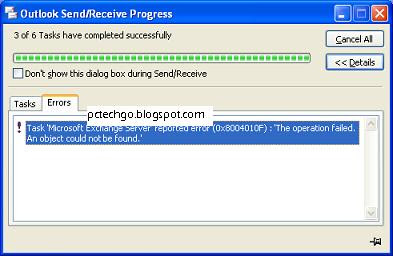
Error 0x8004010F ..."An object could not be found" occurs when you do a manual send receive (the error also occurs with automatic background send receive) in Outlook 2003 or 2007 with Exchange 2007. In this case it was Exchange 2007 with service pack 2 (Exchange 2007 SP2).
The complete error message reads as the following:
 This message just blares out to the user who thinks their emails are not being sent and as you know some users can easily get rattled and panic. The emails are in fact being sent out at least in my case and the majority of cases. If they are now getting and sending emails with this error message then the problem may be worse than this post will be able to assist with. The user's desktop can send and receive email just fine but receive this message each and every time they click on the send/receive button. As a reminder, this and other application problems can be be resolved in most cases quicker by using remote access software. Desktop support software such as online desktop support software enables remote access and control of desktop computers and servers to troubleshoot basic and complex issues remotely. There are tons of sites that suggest rebuilding address books and fixing rights and permissions and a whole slew of other things that just don't seem to help the problem out. After trying those I realized this was not the average problem and mainly because I was getting this 0x8004010F error message with exchange 2007 and their post were solutions aimed at Exchange 2003 or 2000. There are some things that are different in Exchange 2007 that should be remembered if one is to continue rolling out Exchange 2007 or willingly or unwillingly participate in troubleshooting issues on this new platform. Keep the autodiscover feature on the list of things to check when troubleshooting Exchange 2007 issues with Outlook 2007, Outlook 2003 and even with Outlook Web Access. I have included Outlook Web Access too because the dynamics of finding exchange servers has changed somewhat and so too have the SSL certs changed (maybe that will be another post).
Add an autodiscover.yourdomain.com entry into your DNS servers and your problem will most likely go away.
This message just blares out to the user who thinks their emails are not being sent and as you know some users can easily get rattled and panic. The emails are in fact being sent out at least in my case and the majority of cases. If they are now getting and sending emails with this error message then the problem may be worse than this post will be able to assist with. The user's desktop can send and receive email just fine but receive this message each and every time they click on the send/receive button. As a reminder, this and other application problems can be be resolved in most cases quicker by using remote access software. Desktop support software such as online desktop support software enables remote access and control of desktop computers and servers to troubleshoot basic and complex issues remotely. There are tons of sites that suggest rebuilding address books and fixing rights and permissions and a whole slew of other things that just don't seem to help the problem out. After trying those I realized this was not the average problem and mainly because I was getting this 0x8004010F error message with exchange 2007 and their post were solutions aimed at Exchange 2003 or 2000. There are some things that are different in Exchange 2007 that should be remembered if one is to continue rolling out Exchange 2007 or willingly or unwillingly participate in troubleshooting issues on this new platform. Keep the autodiscover feature on the list of things to check when troubleshooting Exchange 2007 issues with Outlook 2007, Outlook 2003 and even with Outlook Web Access. I have included Outlook Web Access too because the dynamics of finding exchange servers has changed somewhat and so too have the SSL certs changed (maybe that will be another post).
Add an autodiscover.yourdomain.com entry into your DNS servers and your problem will most likely go away.
The classic error notification window can be displayed by clicking on the bottom right corner of Outlook or Outlook may have been already configured to display send/receive status each time. In either case, this is what the user sees:Task 'Microsoft Exchange Server' reported error (0x8004010F): ' The operation failed. An object could not be found.'
This message just blares out to the user who thinks their emails are not being sent and as you know some users can easily get rattled and panic. The emails are in fact being sent out at least in my case and the majority of cases. If they are now getting and sending emails with this error message then the problem may be worse than this post will be able to assist with. The user's desktop can send and receive email just fine but receive this message each and every time they click on the send/receive button. As a reminder, this and other application problems can be be resolved in most cases quicker by using remote access software. Desktop support software such as online desktop support software enables remote access and control of desktop computers and servers to troubleshoot basic and complex issues remotely. There are tons of sites that suggest rebuilding address books and fixing rights and permissions and a whole slew of other things that just don't seem to help the problem out. After trying those I realized this was not the average problem and mainly because I was getting this 0x8004010F error message with exchange 2007 and their post were solutions aimed at Exchange 2003 or 2000. There are some things that are different in Exchange 2007 that should be remembered if one is to continue rolling out Exchange 2007 or willingly or unwillingly participate in troubleshooting issues on this new platform. Keep the autodiscover feature on the list of things to check when troubleshooting Exchange 2007 issues with Outlook 2007, Outlook 2003 and even with Outlook Web Access. I have included Outlook Web Access too because the dynamics of finding exchange servers has changed somewhat and so too have the SSL certs changed (maybe that will be another post).
Add an autodiscover.yourdomain.com entry into your DNS servers and your problem will most likely go away.Please post a reply in the comments if this post was useful to you and share so others can find it faster. Thank you.
Sunday, September 28, 2008
No Icons on XP Desktop
No Icons on XP Desktop
If you have a desktop that seems to start up normally in that there are no Trojans or viruses infecting the system after you have just cleaned it using various cleaning programs you can find yourself with an XP desktop with no icons.
Although I have a post of the solution for no icons on XP desktop after cleaning a computer from malware here - Can't find explorer.exe or iexplore.exe when run from task manager. Malware such as Antivirus 2008, Antivirus XP, and others, can leave an Windows XP desktop in a state of cleanliness but those software miscreants but also in a state of no desktop icons.
The reason for this is that the infecting software puts in there hooks in a way that really alters the ways the XP home edition or the XP professional edition computers start up. That's what makes them so difficult to be cleaned. The registry location, which was very difficult to find and not so well known, has an incorrect "image" location for explorer. This registry key is a special key mainly for third party programs and explorer.exe should not be there at all. Just deleting the key makes gets the icons on an XP desktop show again.
If you have a desktop that seems to start up normally in that there are no Trojans or viruses infecting the system after you have just cleaned it using various cleaning programs you can find yourself with an XP desktop with no icons.
Although I have a post of the solution for no icons on XP desktop after cleaning a computer from malware here - Can't find explorer.exe or iexplore.exe when run from task manager. Malware such as Antivirus 2008, Antivirus XP, and others, can leave an Windows XP desktop in a state of cleanliness but those software miscreants but also in a state of no desktop icons.
The reason for this is that the infecting software puts in there hooks in a way that really alters the ways the XP home edition or the XP professional edition computers start up. That's what makes them so difficult to be cleaned. The registry location, which was very difficult to find and not so well known, has an incorrect "image" location for explorer. This registry key is a special key mainly for third party programs and explorer.exe should not be there at all. Just deleting the key makes gets the icons on an XP desktop show again.
Wednesday, September 24, 2008
Attachment.ashx Message when Opening Attachment in OWA Exchange 2007
Message window hangs when trying to open or save attachment using Outlook Web Access (OWA) with Exchange 2007 on a Vista computer with IE7 (Internet Explorer 7).

Attachment.ashx Error Message when Opening Attachment in OWA
I recently ran into a situation where all of the users in an Exchange 2007 organization environement were able to open attachemnts using Outlook Web Access (OWA) against Microsoft Exchange 2007 server without a problem except for a few.
One of the users that wasn't able to open, run, or save an attachment using OWA was getting a message that said:
Geting file information: attachment.ashx from mail.{servername}.com
The message included the flying paper from left to right - the usual animation seen when transfering files in explorer or downloading files with Internet Explorer. This message would be displayed but would never go away and of course the user could open, save or viewer the attachment through Outlook Web Access.
Run Attachments from OWA Email
Well, if any of you encounter this problem and think there is something on the Exchange server that could fix the problem don't bother wasting your time or making any settings changes as the solution won't be found there. You've probably already drilled down and found some of the differences with the user's computer that isn't able to open attachments with Outlook Web Access and commonalities with those users that could view, save, or run attachments through OWA. If the trouble computer has another browser on it like FireFox, try that browser and you'll see that FF works and since it works, then the server or the users account in the domain has nothing to do with the problem.
Windows 7 with IE8
If the problem user ... I mean the problem computer, is Vista with IE7 then the setting that is most likely causing the problem for you is the one located in the Security cetegory under the Advanced tab after clicking Tools > Internet Options from the Internet explorer menu bar.
Do not save encrypted files to disk

Un-check the box next to the setting 'Do not save encrypted files to disk". Once un-checked and the option is saved, open a new browser window and then try to open or save the attachment in Outlook Web Access again, you'll probably have better results.

If the information contained in this post helped solve your problem, please post a comment saying so or link to this post from your blog or site so more people can find the answer more quickly.
Remote Support Software
For web based remote access and computer remote control for remote support, try remote support software that doesn't cost an arm or leg to purchase and use. The name brands have many bells and whistles but are over priced for basic remote access for desktop remote control on the web. Appliance based online computer remote support software solutions and tools tout lower cost because you own the box but you pay maintenance fees and for support that's almost as expensive as the original purchase.
Tuesday, August 26, 2008
Can't find explorer.exe or iexplore.exe when run from task manager
Can't find explorer.exe or iexplore.exe when run from task manager on a Windows XP computer.

 When you try to run explorer.exe, the message states that the program cannot be found or something close to that. It;s not the generic message of a truly mistyped, mis-spelled, or missong program. There is a little know registry location where program "images" can be defined and that's where the problem was located. One little registry setting in an obscure location was preventing explorer.exe from starting. Supposedly this same problem has been experienced by users with Internet Explorer too but I've not seen this one before. If you having problems with Internet Explorer not stating when the program is clearly installed, try this fix for it too.
To find the registry setting please go to this blog post and remember to link to both post and sites and bookmark us in your favorite online bookmarking/sharing sites like delicios, technorati, digg, and others.
Can't find explorer.exe when run from task manager or a command prompt
http://pctechnow.blogspot.com/2008/08/cant-find-explorerexe-when-run-from.html
For software that gives techs the ability of web based remote desktop support at an affordable cost try http://www.4remotesupport.com/
When you try to run explorer.exe, the message states that the program cannot be found or something close to that. It;s not the generic message of a truly mistyped, mis-spelled, or missong program. There is a little know registry location where program "images" can be defined and that's where the problem was located. One little registry setting in an obscure location was preventing explorer.exe from starting. Supposedly this same problem has been experienced by users with Internet Explorer too but I've not seen this one before. If you having problems with Internet Explorer not stating when the program is clearly installed, try this fix for it too.
To find the registry setting please go to this blog post and remember to link to both post and sites and bookmark us in your favorite online bookmarking/sharing sites like delicios, technorati, digg, and others.
Can't find explorer.exe when run from task manager or a command prompt
http://pctechnow.blogspot.com/2008/08/cant-find-explorerexe-when-run-from.html
For software that gives techs the ability of web based remote desktop support at an affordable cost try http://www.4remotesupport.com/
This is a post worth noting. A computer was brought to me after a support person had removed all kinds of trojans, malware and badware from the computer using various tools. The latest and widespreading of these has been Antivirus XP 2008 and Antivirus 2008. The aftermath of this was that the computer was clean but windows can't find explorer. There are many people who have and are still encountering this problem and all forum post that I found while trying to find an answer have not yielded an answer. they all result in the end with the person who is supposed to know this stuff posting to the forum telling the not so experienced person looking for help and advice to re-install XP.
I too have tried to find an answer as to why the explorer.exe file, although shown in the windows directory, could not run when started using Windows Task Manager or even when run using or through a command prompt. The file was there but it would not start when run.
This was a strange problem that started when a computer was infected with mal-ware, ad-ware and other Trojans and bad stuff that so many users manage to get themselves in trouble with. A common aftermath it seems after searching the web for an answer or running smitfraudfix. Although I didn't run this tool, other tools to remove root-kits and other bad software were executed and all the harmful software was removed. The problem now was, and that's when this computer was brought to me, was that explorer.exe would not start. The computer at login would just show a blank desktop. Nothing but the back ground with now icons or task bar. this was a curious problem and after running some tools myself saw that there was no harmful software remaining on the computer.
After trying to track down the cause of the problem by using the error message, I saw that no one had an answer for this problem and the only way some people were able to overcome the problem was to re-install XP pro. The people tried doing a repair install still had the problem or their re-installation efforts of XP failed because they hung up at the part when explorer has to start. A re-installation doesn't "clean out" the registry of erroneous things. It merely replaces system files and adds folders that may be missing (let's not forget it loads devices drivers too).
It turns out that the clue to this problem is not in the error message when run from task manager bu t the answer lies when explorer.exe is run from a command windows or prompt. The error for when explorer.exe is different than any other made up program name.
This is the common error message when a program that truly cannot be found is executed:
When you try to run explorer.exe, the message states that the program cannot be found or something close to that. It;s not the generic message of a truly mistyped, mis-spelled, or missong program. There is a little know registry location where program "images" can be defined and that's where the problem was located. One little registry setting in an obscure location was preventing explorer.exe from starting. Supposedly this same problem has been experienced by users with Internet Explorer too but I've not seen this one before. If you having problems with Internet Explorer not stating when the program is clearly installed, try this fix for it too.
To find the registry setting please go to this blog post and remember to link to both post and sites and bookmark us in your favorite online bookmarking/sharing sites like delicios, technorati, digg, and others.
Can't find explorer.exe when run from task manager or a command prompt
http://pctechnow.blogspot.com/2008/08/cant-find-explorerexe-when-run-from.html
For software that gives techs the ability of web based remote desktop support at an affordable cost try http://www.4remotesupport.com/
Subscribe to:
Comments (Atom)